
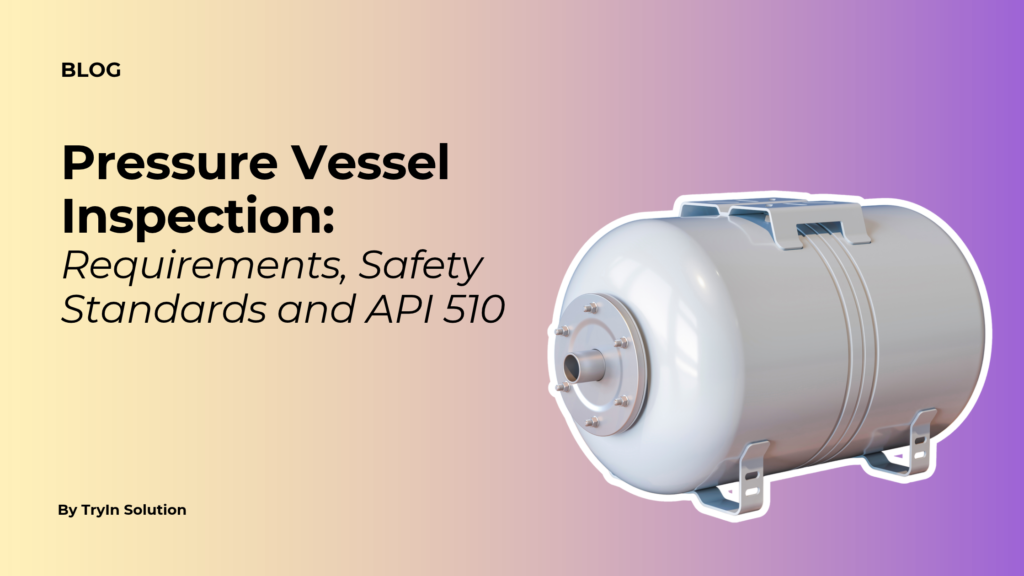
Pressure vessels are essential components in oil and gas facilities, petrochemical plants, refineries and other industrial operations. They are designed to contain liquids or gases under pressure, making their condition and reliability important for safe plant operations. Pressure vessel inspection helps identify deterioration, corrosion and other damage that could affect equipment integrity.
Regular inspection allows asset owners to evaluate equipment condition, plan maintenance and make informed decisions about continued operation. The inspection scope should always be based on the vessel’s design, operating conditions, applicable regulations and relevant industry standards.
What Is Pressure Vessel Inspection?
Pressure vessel inspection is the examination of a vessel to assess its physical condition and identify damage, deterioration or defects that may affect its safe operation.
Depending on the vessel and inspection requirements, the process may include external examinations, internal inspections, thickness measurements, non-destructive testing and a review of historical inspection records.
Common examples of pressure vessels include separators, receivers, storage vessels designed for pressure service, heat exchangers and process vessels.
Why Is Pressure Vessel Inspection Important?
Industrial pressure equipment can experience corrosion, erosion, fatigue and other forms of deterioration during service. Inspection helps identify these conditions and assess whether further evaluation or corrective action is needed.
1. Identify Corrosion and Material Loss
Corrosion can reduce the thickness of vessel walls over time. Thickness measurements and other suitable examination techniques help assess material loss and support remaining-life evaluations when performed using appropriate methods.
2. Detect Cracks and Other Damage
Depending on the inspection technique, examinations may identify cracking, surface discontinuities, weld defects or other forms of damage that require further assessment.
3. Support Safe Plant Operations
Inspection findings provide information that helps engineering and maintenance teams evaluate equipment condition and determine appropriate actions.
4. Improve Maintenance Planning
Inspection results can help prioritize repairs, additional examinations and future inspections. This supports a planned maintenance approach rather than relying only on equipment failures to trigger action.
5. Support Compliance
Following applicable inspection codes, regulations and site procedures helps organizations maintain appropriate records and demonstrate that equipment has been evaluated against the relevant requirements.
What Is API 510?
API 510 is an inspection code developed by the American Petroleum Institute for in-service inspection, rating, repair and alteration of pressure vessels and their associated pressure-relieving devices within its scope.
It provides requirements and guidance used by inspection and engineering professionals to evaluate pressure vessel integrity during service.
API 510-related activities may involve reviewing inspection history, evaluating corrosion rates, assessing remaining life, determining inspection intervals and supporting repair or alteration decisions. These activities require the relevant technical expertise and must follow the applicable code requirements.
It is important to distinguish between API 510, which addresses in-service pressure vessel inspection, and other standards that may govern vessel design, fabrication or construction.
Common Pressure Vessel Inspection Methods
The appropriate inspection method depends on the vessel’s construction, material, operating history, damage mechanisms and inspection objectives.
Visual Inspection
Visual examination helps identify visible corrosion, leaks, deformation, coating damage and other external or internal conditions where surfaces are accessible.
Ultrasonic Thickness Testing
Ultrasonic thickness measurement is commonly used to assess wall thickness and monitor material loss over time. Results must be evaluated against suitable reference data and applicable engineering criteria.
Non-Destructive Testing (NDT)
Depending on the suspected damage, techniques such as ultrasonic testing, radiographic testing, magnetic particle testing or liquid penetrant testing may be used to examine specific areas.
Internal Inspection
Where required and feasible, internal inspection allows examination of accessible vessel surfaces and components. Safe access, isolation, cleaning and confined-space controls must be addressed before entry.
Engineering Assessment
When inspection identifies significant deterioration or damage, an engineering assessment may be necessary to determine its significance and establish appropriate next steps.
When Should a Pressure Vessel Be Inspected?
Inspection timing varies according to the applicable code, vessel history, operating conditions, damage mechanisms and regulatory requirements.
An inspection programme may consider:
- The vessel’s design and service conditions.
- Previous inspection findings and measured corrosion rates.
- Potential damage mechanisms and their likelihood.
- Applicable inspection intervals and regulatory obligations.
- Changes in operating conditions, repairs or alterations.
There is no single inspection interval suitable for every pressure vessel. The interval should be established by qualified personnel using the governing requirements and the equipment’s actual condition.
How to Choose a Pressure Vessel Inspection Company
Selecting an appropriate inspection provider is important for industrial facilities. Before appointing a company, consider its experience with similar equipment, personnel qualifications, NDT capabilities and familiarity with the applicable inspection codes.
Also review the proposed scope of work, reporting procedures, safety practices and ability to coordinate inspections with plant operations.
Inspection reports should clearly document the equipment examined, methods used, findings and any recommended follow-up actions. Decisions about fitness for continued service should be made through the appropriate technical and engineering process.
Pressure Vessel Inspection Support from TryIn Solution
Reliable equipment inspection is an important part of maintaining industrial asset integrity. TryIn Solution provides industrial inspection and quality-related services to support project and equipment requirements.
If your facility requires pressure vessel inspection or third-party inspection support, discuss the equipment type, operating conditions, applicable code and inspection scope with the team.
Frequently Asked Questions
What is the purpose of pressure vessel inspection?
Its purpose is to evaluate equipment condition, identify damage or deterioration and support decisions about maintenance, repairs and continued operation.
What does API 510 cover?
API 510 addresses in-service inspection, rating, repair and alteration of pressure vessels and associated pressure-relieving devices within the code’s scope.
Which methods are used for pressure vessel inspection?
Methods may include visual examination, ultrasonic thickness measurement and other suitable non-destructive testing techniques, depending on the inspection objectives and equipment condition.
How often should pressure vessels be inspected?
Inspection intervals depend on applicable requirements, equipment condition, operating history and damage mechanisms. Qualified personnel should establish the appropriate intervals for each vessel.
Need industrial inspection support? Contact TryIn Solution to discuss your pressure vessel and third-party inspection requirements.
Note: The applicable code, inspection interval and acceptance criteria must be confirmed for the specific equipment and jurisdiction. This article is for general informational purposes and does not replace a qualified engineering assessment.