
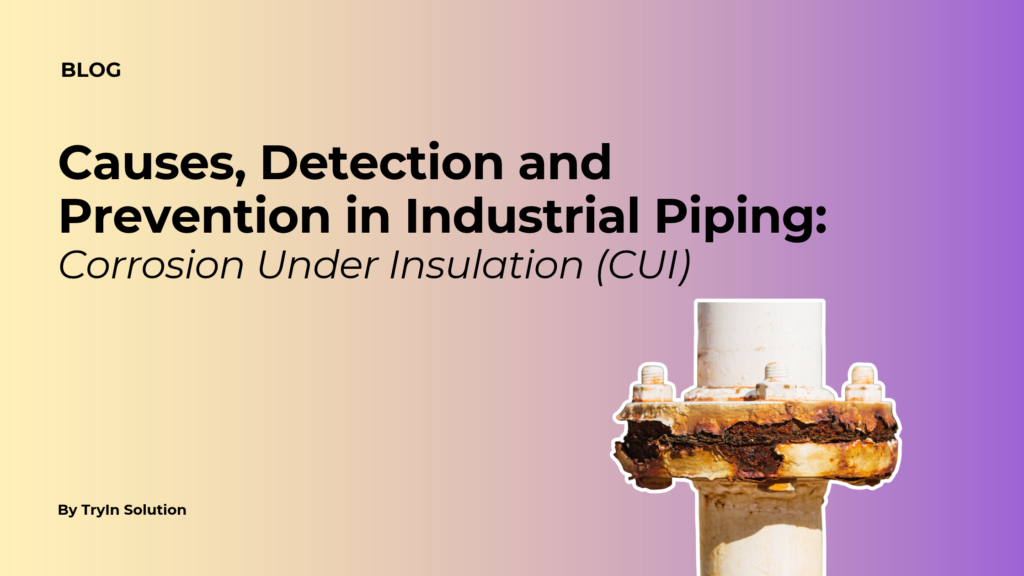
Industrial piping and equipment are often covered with insulation to maintain operating temperatures, improve energy efficiency and protect personnel from hot or cold surfaces. However, moisture can enter or become trapped beneath the insulation, creating conditions that lead to Corrosion Under Insulation (CUI).
CUI is a major concern in oil and gas facilities, refineries, petrochemical plants and other industrial environments. Because the corrosion develops beneath the insulation, it may remain hidden until significant material damage has occurred.
Understanding the causes, detection methods and prevention strategies for corrosion under insulation is essential for maintaining equipment reliability, managing operational risks and supporting long-term asset integrity.
What Is Corrosion Under Insulation (CUI)?
Corrosion Under Insulation (CUI) is a form of external corrosion that develops on insulated piping, vessels and other equipment when moisture becomes trapped beneath the insulation or protective cladding.
Water can enter through damaged insulation, loose joints, poor sealing, weather exposure or condensation. When moisture remains in contact with the external metal surface, corrosion may develop over time.
CUI can affect different types of industrial equipment, including:
- Process piping and pipelines
- Pressure vessels
- Storage tanks
- Heat exchangers
- Boilers
- Industrial equipment operating at elevated or low temperatures
The main challenge with CUI is that the insulation conceals the affected surface, making early detection difficult without a planned inspection programme.
What Causes Corrosion Under Insulation?
Several environmental, operational and maintenance-related factors can contribute to CUI.
1. Moisture Ingress
Rainwater, wash water or other sources of moisture can enter through damaged cladding, open joints and poorly sealed insulation systems.
Once water reaches the metal surface, it may remain trapped and create conditions for corrosion.
2. Damaged or Deteriorated Insulation
Insulation can deteriorate due to ageing, physical damage, vibration or poor installation. Cracks, gaps and damaged protective coverings can allow moisture to enter.
3. Temperature Changes
Changes in operating temperature can cause condensation beneath insulation. Repeated heating and cooling cycles may also affect insulation and cladding integrity.
4. Poor Installation and Maintenance
Incorrect insulation installation, inadequate sealing and damaged weather barriers can increase the likelihood of moisture penetration.
5. Corrosive Environmental Conditions
Industrial facilities located in coastal or humid environments may experience additional exposure to moisture and airborne salts, which can contribute to external corrosion.
Why Is CUI a Serious Concern for Industrial Facilities?
Corrosion under insulation can affect equipment integrity without showing obvious external signs. If it remains undetected, the damage may become severe enough to require major repairs or equipment replacement.
Some of the key risks include:
- Wall thinning: Corrosion gradually reduces the remaining metal thickness of piping and equipment.
- Leakage: Severe material loss can lead to leaks and product release.
- Unplanned shutdowns: Unexpected equipment damage can interrupt industrial operations.
- Safety concerns: Leaks involving hazardous or high-temperature fluids may create serious workplace risks.
- Higher maintenance costs: Delayed detection can increase repair, replacement and inspection expenses.
A proactive CUI inspection programme helps organisations identify corrosion before it develops into a major integrity issue.
Common Areas Where Corrosion Under Insulation Develops
CUI does not occur uniformly across an insulated system. Certain locations are more vulnerable because of moisture exposure, insulation damage or design conditions.
Common areas requiring attention include:
Pipe Supports and Pipe Shoes
Moisture can accumulate around supports and contact points, making these locations important inspection areas.
Insulation Joints and Seams
Poorly sealed joints can allow rainwater and other moisture to enter the insulation system.
Valves and Flanges
Complex shapes and removable insulation covers can create gaps where moisture may penetrate.
Low Points and Horizontal Pipe Sections
Water may collect at low points or beneath insulation where drainage is inadequate.
Damaged Cladding Areas
Dents, cracks, loose bands and damaged weatherproofing can expose insulation to external moisture.
CUI Inspection: Methods for Detecting Corrosion Under Insulation
Detecting corrosion beneath insulation requires an inspection approach suited to the equipment, insulation type, operating conditions and expected damage mechanisms.
A combination of screening and detailed examination methods may be used.
1. Visual Inspection
External visual inspection helps identify conditions that may indicate moisture ingress or insulation deterioration.
Inspectors look for:
- Damaged or missing cladding
- Open insulation joints
- Water staining
- Rust marks
- Loose bands and seals
- Deteriorated weatherproofing
Visual inspection cannot confirm the full extent of corrosion beneath insulation, but it helps identify areas requiring further assessment.
2. Insulation Removal and Direct Examination
Removing insulation from selected locations allows inspectors to examine the underlying metal surface directly.
This can help identify:
- External corrosion
- Pitting
- Localised metal loss
- Coating deterioration
- Surface damage
Insulation removal is often used where direct examination is required to confirm suspected corrosion.
3. Ultrasonic Thickness Testing (UT)
Ultrasonic Testing is used to measure remaining wall thickness at accessible metal surfaces.
After suitable access is provided, UT measurements can help assess metal loss and identify areas requiring additional evaluation.
4. Profile Radiography
Radiographic techniques may be used to examine selected insulated piping sections without completely removing the insulation, depending on the inspection arrangement and limitations.
They can help identify wall loss or other relevant indications that require further investigation.
5. Advanced Inspection Techniques
Other inspection technologies may be considered for screening or assessing insulated equipment. The appropriate technique depends on factors such as material, geometry, insulation system, temperature and inspection objectives.
No single technique is suitable for every CUI application. Inspection methods should be selected by qualified personnel based on the specific equipment and conditions.
How to Prevent Corrosion Under Insulation
Preventing CUI requires a combination of good insulation practices, protective coatings, inspection planning and maintenance.
1. Use Suitable Protective Coatings
Appropriate coating systems can help protect metal surfaces from external corrosion. Coating selection should consider operating temperature, environmental exposure and the relevant project specifications.
2. Ensure Proper Insulation Installation
Insulation should be installed correctly with suitable joints, seals and weatherproofing. Proper installation helps reduce the possibility of moisture entering the system.
3. Maintain Protective Cladding
Cladding should be inspected regularly for cracks, loose fittings, damaged seams and other defects that may allow water ingress.
4. Repair Damaged Insulation Promptly
Damaged insulation and weather barriers should be repaired before moisture penetration leads to further deterioration.
5. Implement Risk-Based Inspection
Risk-Based Inspection (RBI) can help prioritise equipment and locations for inspection based on factors such as corrosion likelihood, potential consequences and operating conditions.
6. Maintain Inspection Records
Documenting inspection findings, thickness measurements, repairs and insulation maintenance helps organisations monitor equipment condition over time.
CUI and Risk-Based Inspection (RBI)
Corrosion Under Insulation is an important consideration within an industrial asset integrity programme.
Risk-Based Inspection helps organisations prioritise inspection activities by considering the likelihood of equipment failure and the potential consequences.
For CUI management, an RBI-based approach may consider:
- Equipment operating temperature
- Insulation type and condition
- Environmental exposure
- Equipment age and service history
- Previous inspection findings
- Corrosion history
- Potential consequences of leakage or failure
By prioritising higher-risk equipment and locations, organisations can use inspection resources more effectively and make informed maintenance decisions.
Choosing the Right CUI Inspection Service Provider
Selecting a competent inspection service provider is important for identifying hidden corrosion and developing an effective inspection strategy.
Before selecting a provider, consider the following:
- Industrial inspection experience: Experience with insulated piping, vessels and equipment in relevant industries.
- NDT capabilities: Access to suitable non-destructive testing methods for the equipment and inspection scope.
- Technical knowledge: Understanding of corrosion mechanisms, insulation systems and asset integrity requirements.
- Risk-based approach: Ability to support inspection prioritisation based on equipment condition and risk.
- Clear reporting: Inspection reports that document findings, measurements and recommended actions.
- Project coordination: Ability to coordinate inspection activities with maintenance and operations teams.
A structured approach helps organisations make better decisions about corrosion management, maintenance and equipment reliability.
How TryIn Solution Supports Asset Integrity and Inspection Requirements
TryIn Solution provides engineering consultancy, third-party inspection and asset integrity services to support industrial projects and operational requirements.
Our approach focuses on equipment condition assessment, inspection support and quality-focused solutions that help organisations manage industrial asset integrity.
For facilities dealing with corrosion-related challenges, inspection planning and technical assessment play an important role in identifying potential issues and supporting appropriate maintenance decisions.
The India–GCC Bridge: Inspecting at source in Pune or Mumbai to GCC client specifications.
TryIn Solution connects inspection capabilities in India with the technical and quality requirements of clients across the UAE and wider GCC region.
Explore our Asset Integrity Services and Third Party Inspection Services to learn more.
Frequently Asked Questions (FAQs)
1. What is Corrosion Under Insulation (CUI)?
CUI is external corrosion that develops on metal surfaces beneath insulation when moisture becomes trapped between the insulation and the equipment surface.
2. Which industries are most affected by CUI?
CUI is a concern in oil and gas, petrochemical, refining, chemical processing, power generation and other industries that use insulated piping and equipment.
3. How is corrosion under insulation detected?
CUI can be assessed using visual inspection, selective insulation removal, Ultrasonic Testing, profile radiography and other suitable inspection technologies.
4. Can CUI occur on stainless steel?
Yes. Certain stainless steel equipment can experience corrosion-related damage beneath insulation, including chloride-related stress corrosion cracking under suitable conditions.
5. How can CUI be prevented?
Prevention includes suitable protective coatings, correct insulation installation, effective cladding and sealing, regular maintenance and risk-based inspection planning.
6. Why is CUI difficult to detect?
CUI develops beneath insulation, which conceals the metal surface. Significant corrosion may therefore occur before visible external signs become apparent.
7. What is the role of RBI in CUI management?
Risk-Based Inspection helps prioritise equipment and inspection locations based on corrosion likelihood, potential consequences and operating conditions.
Conclusion
Corrosion Under Insulation is a hidden integrity challenge that can affect industrial piping, vessels and other insulated equipment. Without proper inspection and maintenance, moisture-related corrosion may lead to wall thinning, leakage, equipment damage and operational interruptions.
A planned CUI inspection and prevention programme helps organisations identify vulnerable areas, assess corrosion damage and take appropriate maintenance action.
Looking for inspection and asset integrity support for your industrial facility? Connect with TryIn Solution to discuss your project requirements.
Website: https://tryinsolution.com/