
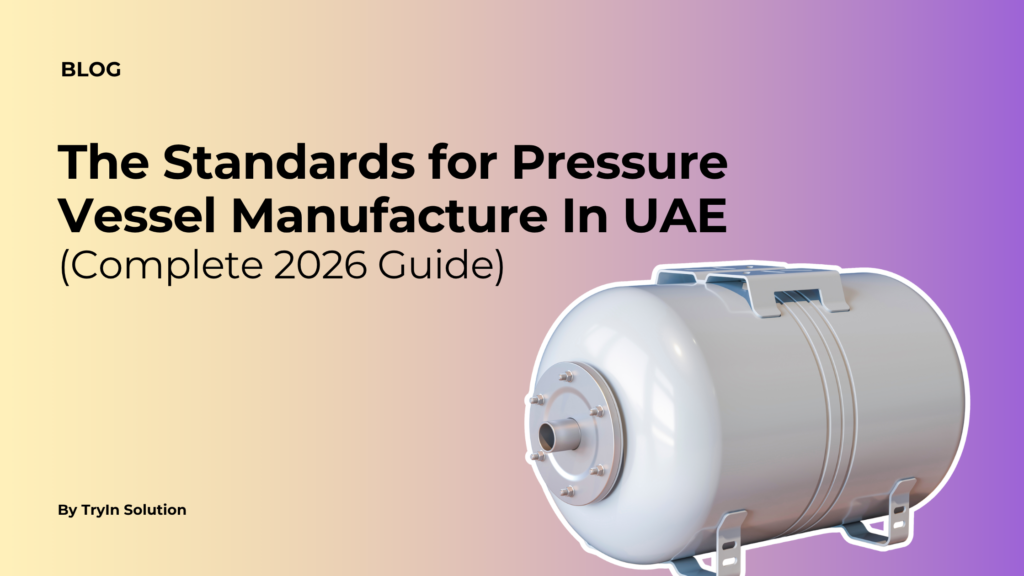
The Pressure Vessel Manufacture In UAE follows strict international standards such as ASME (American Society of Mechanical Engineers), ISO certifications, and local UAE regulations to ensure safety, durability, and compliance in industrial applications.
Introduction
The UAE is a major hub for industrial growth, especially in oil & gas, petrochemicals, and manufacturing sectors. In such industries, pressure vessels play a critical role in storing and transporting gases and liquids under high pressure.
To ensure safety and reliability, the Pressure Vessel Manufacture In UAE must comply with globally recognized standards and strict inspection protocols. Understanding these standards is essential for businesses looking to source high-quality and compliant equipment.
Key Standards for Pressure Vessel Manufacture In UAE
ASME Boiler and Pressure Vessel Code (BPVC)
The most important standard for Pressure Vessel Manufacture In UAE is the ASME BPVC. This globally accepted code ensures that pressure vessels are designed, fabricated, tested, and certified for safety.
- Covers design, materials, fabrication, and inspection
- Ensures structural integrity under high pressure
- Widely required in oil & gas and industrial projects
Learn more about ASME standards here:
ASME Official Website
ISO Certifications
Manufacturers in the UAE also follow ISO standards to maintain quality and consistency.
Common ISO standards include:
- ISO 9001 – Quality Management
- ISO 14001 – Environmental Management
- ISO 45001 – Occupational Health & Safety
These certifications ensure that the Pressure Vessel Manufacture In UAE meets international quality and safety benchmarks.
UAE Local Regulations & Authority Compliance
In addition to international standards, manufacturers must comply with UAE-specific regulations set by local authorities.
These include:
- Safety approvals from municipal authorities
- Compliance with industrial safety laws
- Project-specific regulatory requirements
For official UAE regulations, refer to:
UAE Ministry of Industry and Advanced Technology
Material Standards and Testing
Material selection is critical in Pressure Vessel Manufacture In UAE. Approved materials must meet ASME and ASTM standards.
Key requirements:
- Corrosion resistance
- High tensile strength
- Temperature and pressure tolerance
Testing methods include:
- Hydrostatic testing
- Non-destructive testing (NDT)
- Radiographic and ultrasonic testing
Third-Party Inspection & Certification
Third-party inspection plays a vital role in ensuring compliance and safety. Independent inspection agencies verify that the vessel meets all required standards.
Benefits include:
- Quality assurance
- Risk reduction
- Compliance with international projects
Learn more about inspection services here:
https://tryinsolution.com/third-party-inspection-services
Why Standards Matter in Pressure Vessel Manufacturing
Following proper standards in Pressure Vessel Manufacture In UAE is not just a regulatory requirement—it is essential for:
- Safety: Prevents accidents and equipment failure
- Compliance: Required for international projects
- Durability: Ensures long-term performance
- Trust: Builds credibility with clients
Without proper standards, pressure vessels can pose serious risks to operations and human safety.
Industries That Rely on These Standards
The Pressure Vessel Manufacture In UAE is crucial for industries such as:
- Oil & Gas
- Petrochemicals
- Power Plants
- Food Processing
- Chemical Manufacturing
Each of these industries depends on high-quality, certified pressure vessels for safe and efficient operations.
How to Choose a Compliant Manufacturer
When selecting a manufacturer, ensure they:
- Follow ASME and ISO standards
- Provide complete documentation and certification
- Offer third-party inspection reports
- Have experience in your industry
Choosing the right partner ensures your project meets both safety and compliance requirements.
Final Thoughts
The Pressure Vessel Manufacture In UAE is governed by strict international and local standards to ensure safety, quality, and reliability. From ASME certification to ISO compliance and third-party inspections, every step is designed to meet global industrial requirements.
Businesses that prioritize these standards not only ensure safety but also gain a competitive advantage in international markets.